
The Basic Math and Science Test, often abbreviated simply as the BMST, serves as a foundational assessment for various technical military occupational specialties (MOS) and demanding civilian roles requiring strong quantitative aptitude. Unlike general knowledge tests, the BMST is specifically engineered to measure a candidate’s proficiency in fundamental academic disciplines: arithmetic, basic algebra, introductory geometry, and core principles of physics and chemistry. These are the building blocks of technical comprehension, logic, and problem-solving required in fields like engineering, logistics, and maintenance. Achieving a high score on the BMST is typically a prerequisite, demonstrating that an applicant possesses the necessary analytical toolkit to succeed in subsequent technical training and on-the-job application.
Underestimating the need for dedicated, structured preparation for the BMST is a frequent misstep made by many otherwise qualified applicants. The challenge lies not in the complexity of the college-level material, but in the breadth of basic concepts and the severe time constraints placed on solving complex problems. Success on the BMST is achieved through rigorous formula memorization, consistent practice with word problems, and the strategic refinement of calculation speed. This comprehensive guide details seven essential tips, derived from top search queries, to help you transition from simply recalling information to fluently applying mathematical and scientific principles under pressure. By implementing this focused strategy, you can confidently approach and conquer the quantitative challenges presented by the examination.
1. Master the Fundamentals of BMST
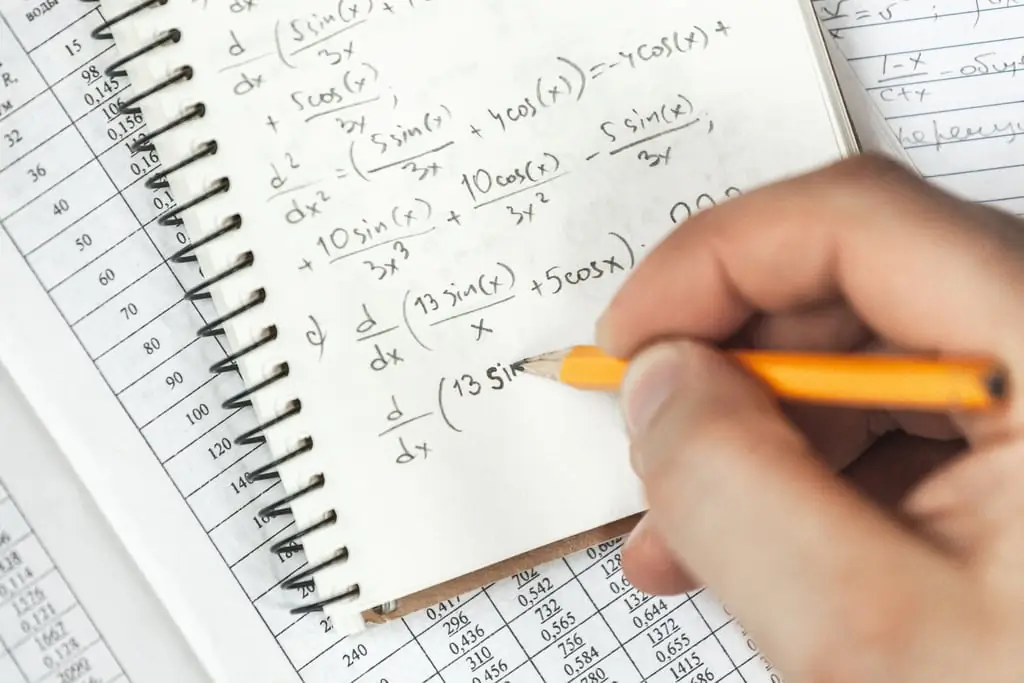
The term BMST now specifically denotes the Basic Math and Science Test, and your initial focus must be on cataloging and mastering the precise range of topics covered in its curriculum. The mathematics section typically spans basic arithmetic operations, fractions, decimals, percentages, and simple algebraic manipulations, often integrated into word problems that test logical reasoning. The science component usually focuses on introductory concepts in physics (like force, motion, simple machines, and energy conversion) and chemistry (such as atomic structure, states of matter, and basic reactions). Your first crucial step is to perform a detailed subject audit, identifying which of these foundational areas represents a genuine knowledge gap. For instance, a common pitfall is rusty algebra skills—the ability to swiftly isolate a variable or solve a linear equation. This phase requires methodical study: reviewing textbooks, creating formula sheets, and drilling essential equations until recall is instantaneous. The aim is not just familiarity but absolute fluency, enabling rapid problem recognition and solution execution under timed conditions. To truly ace the assessment and get a comprehensive breakdown of all the necessary mathematical and scientific topics, you should consult a full, authoritative guide on the bmst test.
2. Prepare for the Official BMST Test
Recognizing the official bmst test requires understanding its format and time-management challenges, particularly as they relate to a quantitative assessment. This test is designed to be completed under tight time constraints, meaning you must not only know the answer but must be able to calculate it quickly and accurately. Different agencies or military branches may slightly alter the balance between math and science questions; for instance, an engineering-focused test may lean heavily on physics and geometry, while a logistics role might prioritize arithmetic and unit conversion. Therefore, your preparation must be meticulously tailored to the specific content outline provided in your application materials. The key to successful preparation is to actively and consistently simulate the exact testing conditions. This indispensable simulation includes strictly managing the severe time constraints, acclimating yourself to solving equations without the aid of a calculator (if prohibited), and maintaining sharp, continuous focus over the required extended period of the examination. An in-depth understanding of the scope, and therefore what is bmst in this context, is vital. Remember that the process of mastering technical aptitude through practice is fundamentally similar to strengthening a physical muscle: focused, strategic, and unrelenting consistency is the paramount key to achieving peak performance. You can test your foundational knowledge in key areas by practicing some bmst practice exam questions, which often cover scientific concepts and principles.
3. Utilize a Comprehensive BMST Practice Test Strategy
A structured and analytical bmst practice test strategy is, without question, the absolute backbone of any high-scoring preparation plan for a math and science exam. It is a critical error to simply take one practice test and believe you are ready; you must instead commit to using a deliberate sequence of tests to rigorously track your incremental progress and efficiently target your recurring conceptual weaknesses. Begin your process with a comprehensive diagnostic test to first establish an honest, quantifiable baseline score in math and science and identify where your natural aptitudes lie. Immediately after, you must meticulously analyze the detailed results to see which specific content areas—whether it’s introductory chemistry, algebra word problems, or geometric spatial reasoning—are consistently pulling your overall score down. Your subsequent practice sessions should then dedicate a disproportionate amount of extra time and energy to those identified weaker areas, employing focused drills and repetition of relevant formulas. Once you feel a noticeable, measurable improvement in those challenging areas, you should take another complete, full-length practice test to objectively measure the achieved gains. This cyclical approach of practice, rigorous analysis, and targeted remediation is universally recognized as the single most efficient and proven way to maximize your final quantitative score on the examination. You must also ensure that the practice tests you choose and utilize are highly relevant and structurally similar to the actual, official format of the exam you will be sitting for. For example, a thorough review of the mathematics required is a must for the exam; to ensure you are proficient in quantitative reasoning, you can try these bmst practice test questions.

4. Understanding the Context of BMST Bonneville
While the core quantitative skills tested by the BMST remain fundamentally consistent, the term bmst bonneville often refers to the specific administrative application or localized context of the test within a particular vocational school, military training detachment, or technical program associated with that district. This specific context may mean the test includes a distinct module of questions that are uniquely tailored to the curriculum or job demands of that particular location, such as math problems involving specific industrial measurements or science questions related to regional environmental regulations. For an applicant, this critical context means proactively seeking out any and all local variations, supplementary administrative procedures, or district-specific rules unique to the Bonneville testing site. This unique context may vitally affect how the test is officially scored or what specific math formulas are permitted for use. When preparing for the exam, it is highly advisable to review official sample questions, paying especially close attention to the quantitative and logical reasoning portion, to ensure you are fully familiar with the exact type of reasoning and problem-solving required. For a highly effective and productive preparation, treat every dkms bmst resource you find as a valuable insight, and try to replicate the precise testing conditions you will ultimately face, including the rules regarding scratch paper and permitted resources.
5. Specific Preparation for the BMST Test Police
For those entering law enforcement, the bmst test police variation applies the principles of math and science to scenarios pertinent to public safety and criminal investigation. This specialized test version often incorporates questions on technical math used in practical police work, such as calculating speeds and distances for accident reconstruction, or applying basic physics principles to ballistics (trajectory and velocity). Furthermore, the science section may include concepts relevant to forensic science, such as basic chemistry (e.g., substance identification, toxicology) or biology (e.g., DNA structure). These demanding roles inherently require quick, highly accurate, and decisive analytical actions performed consistently under duress. Law enforcement applicants should therefore strategically focus on scenario-based technical questions. Rather than simply practicing abstract math problems, solve word problems rooted in police operations to build a bridge between abstract knowledge and practical application. If you find yourself consistently struggling with the scientific reasoning sections, you should consider using a bmst test study guide resource and dedicating focused study time to reinforce this particular area to maximize your overall performance.
6. Approach the BMST Practice Exam Effectively
Treating every single bmst practice exam session as if it were the official, high-stakes test day is an absolutely essential mindset for achieving optimal success in a quantitative test. This necessary approach means implementing strict controls during your practice: eliminate all potential external distractions, set a physical timer for the entire duration of the actual examination, and enforce a rule where you are not permitted to pause or check formulas. The single most critical step that follows the completion of the practice exam is the in-depth review phase—do not simply look at your final overall score and move on. You must meticulously drill down into the specific nature and source of every single error you made. Were your errors primarily due to conceptual failure (not knowing the correct formula or principle) or calculation error (making a mistake in simple arithmetic or algebra)? Conceptual failures require targeted re-study of the topic, while calculation errors demand focused, slow-motion drilling of arithmetic accuracy. By rigorously using a high volume of quality practice exams and analyzing your errors, your brain will begin to rapidly internalize the test’s patterns and required response sequences, turning initial slow, deliberate calculations into highly efficient, near-automatic processes. This transformation is the ultimate goal of technical testing preparation: to achieve a consistent, high-speed, and error-free level of performance, regardless of the test’s complexity.
7. Differentiating the PAT BMST Test
The term pat bmst test refers to a critical, two-part assessment that combines a Physical Abilities Test (PAT) with the Basic Math and Science Test (BMST). This means that ‘PAT’ specifically stands for a required Physical Abilities Test, and for applicants facing this rigorous combination, the preparation strategy must be comprehensive and intensely holistic. The key challenge here is maintaining high-level cognitive function immediately following peak physical exertion. While the Math and Science portion requires intense mental focus and recall, the PAT simultaneously demands peak physical fitness. It is crucial to understand that the physical state of your body can and will directly impact your cognitive performance; significant fatigue from a preceding physical test can dramatically slow your ability to process word problems or accurately recall formulas during the BMST section. Therefore, your training regimen must strategically include practice simulations where you perform a strenuous physical activity—such as a timed run or obstacle course—immediately followed by a full, timed Math and Science test section. This integrated training actively forces your body and mind to maintain cognitive sharpness and computational accuracy even when you are physically depleted. This combined, challenging training ensures that your fatigue management and mental resilience are just as sharp and reliable as your core quantitative abilities, guaranteeing your success across both equally vital components of the bmst test broward assessment.

Frequently Asked Questions
What is BMST?
The Basic Math and Science Test (BMST) is a standardized, timed examination designed to measure an individual’s fundamental proficiency in arithmetic, algebra, geometry, and basic principles of physics and chemistry. It is primarily used by military and industrial sectors to screen applicants for technical roles where strong quantitative reasoning, problem-solving, and formula application skills are essential for safety and performance.
Is BMST harder than the POSS?
The difficulty of the Math and Science BMST relative to the POSS (Plant Operator Selection System) is comparable, as both test technical aptitude under strict time limits. The POSS often focuses more heavily on reading comprehension of technical manuals and mechanical aptitude, while the BMST typically has a broader, more academic focus on pure math and science subjects. The challenge of the BMST lies in the sheer volume of formulas and scientific principles that must be memorized and applied.
How can I best prepare using a BMST practice test?
The best preparation using a bmst practice test involves a disciplined, iterative approach. Start by using the practice test to diagnose your weak areas (e.g., geometry versus chemistry). Then, dedicate short, frequent study sessions to re-learning the conceptual foundations and formulas for those weaknesses. Finally, take full-length, timed practice tests under simulated exam conditions to build stamina and calculation speed.
What science concepts are relevant to the BMST Test Police?
The bmst test police variation often emphasizes science concepts with direct law enforcement application. These include basic physics principles for understanding vehicle speed, velocity, and distance (crucial for accident reconstruction), and introductory chemistry and biology concepts relevant to evidence handling, toxicology, and forensic analysis.
How does the PAT component relate to the Math and Science skills of the PAT BMST Test?
In the pat bmst test, the PAT (Physical Abilities Test) component tests physical fitness while the BMST tests cognitive and quantitative fitness. The two are related because candidates must often perform the cognitive test immediately after the physical exertion of the PAT. This structure tests the critical ability to maintain clear mathematical reasoning and formula recall despite physical fatigue.
Conclusion
Succeeding on the Army BMST, interpreted as the Basic Math and Science Test, is fundamentally about disciplined quantitative preparation. By internalizing the seven strategic tips—from meticulously auditing the required mathematical and scientific formulas to adopting a high-intensity, iterative bmst practice test regimen—you can bridge the gap between abstract knowledge and high-speed problem-solving. It is crucial to remember that this exam is not just a recall test; it is an assessment of your functional fluency with core technical concepts. Whether you are facing a standard technical assessment or the specialized constraints of the bmst test police variation, consistent, focused training on applied math and science principles will ensure you walk into the testing center with the conceptual knowledge and computational accuracy required to achieve a top score and advance your career.